
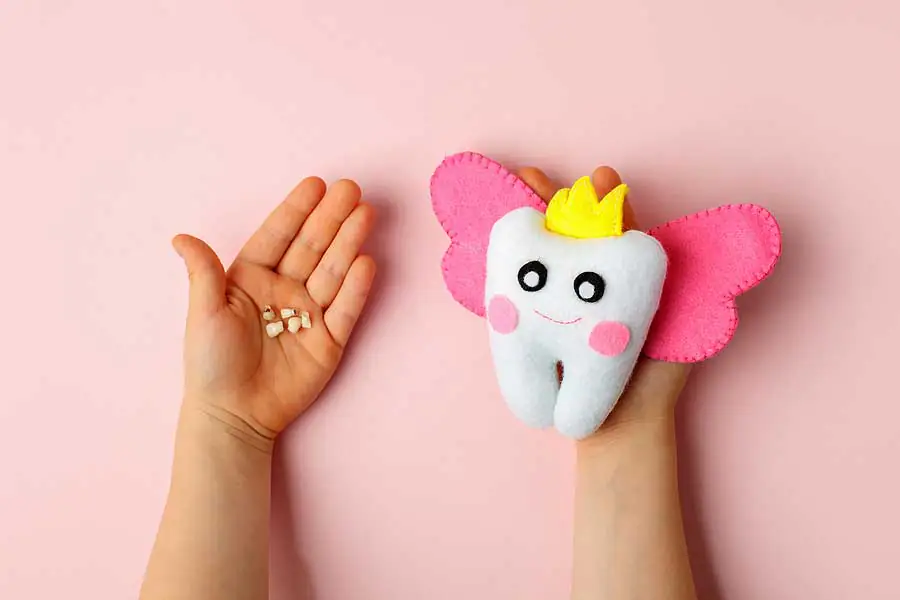
Humans spend part of childhood proudly displaying a toothless grin. Losing baby teeth is such a universal rite of passage that it hardly seems remarkable. Yet behind every tooth tucked under a pillow lies a fascinating evolutionary solution: humans are designed to grow two sets of teeth.
Scientists call this arrangement diphyodonty, meaning an organism develops two generations of teeth during its lifetime—a primary (baby) set followed by a permanent adult set. Most mammals share this trait, but humans showcase it particularly well because of the dramatic growth that occurs between infancy & adulthood.
Tiny Jaws, Big Teeth
Imagine trying to fit 32 adult-sized teeth into the mouth of a two-year-old. A baby’s jaw is simply too small to accommodate a full set of adult-sized teeth.
The fundamental reason humans have baby teeth is simple: our jaws grow enormously as we develop. Teeth, unlike bones, do not continue expanding once fully formed. A child’s jaw is far too small to accommodate a complete set of adult teeth, so nature provides a smaller temporary set first. As the jaw grows and expands, these primary teeth are gradually replaced by larger permanent teeth that are better suited for an adult-sized mouth.
This two-stage system allows children to chew solid food and develop speech long before their jaws are large enough for adult dentition.
More Than Just Placeholders
Baby teeth may be temporary, but they are far from being just placeholders.
Primary teeth help children chew food properly, form words clearly, & support normal facial development. Perhaps most importantly, they act as natural space maintainers. Each baby tooth essentially reserves a spot for the permanent tooth that will eventually emerge beneath it.
When baby teeth are lost too early due to decay or injury, neighboring teeth can drift into the empty space, increasing the risk of crowding and alignment issues later on.
Why Stop at Two Sets?
Given how often dentists repair damaged teeth, why didn’t evolution give us endless replacements like sharks?
The answer lies in how mammalian teeth evolved. Humans & most mammals have highly specialized teeth—incisors for cutting, canines for tearing & molars for grinding. These teeth fit together with remarkable precision. Maintaining that complex arrangement favors a limited number of carefully developed tooth generations rather than continuous replacement.
Evolutionary trade-offs are common. Mammals gained specialized, efficient chewing teeth but sacrificed the ability to endlessly replace them.
Humans have two sets of teeth because one set simply isn’t enough to serve both a growing child & a full-sized adult. Baby teeth provide the right tools for early life while guiding the development of the permanent teeth waiting below. As the jaw expands, a second, larger set takes over, creating a system that balances growth, function & efficiency.
Sources
https://touroscholar.touro.edu/sjlcas/vol1/iss1/7/
https://www.the-scientist.com/why-do-we-have-baby-teeth-and-adult-teeth-73746
https://engage.ada.org/p/phys/why-baby-teeth-are-important-1790
https://phys.org/news/2022-09-humans-teeth-marsupials-rewriting-story.html