
We teach kids to share toys, siblings borrow hoodies & couples often split desserts without a second thought. But there’s one household item that should always remain strictly personal: your toothbrush.
It may seem harmless to borrow a toothbrush in a pinch or let a child use yours when theirs mysteriously disappears. But your toothbrush is more than a cleaning tool. It is a collection point for the bacteria, viruses, saliva, food debris & even tiny traces of blood that naturally occur during brushing. Sharing it means sharing all of those things too.
You Are Sharing More Than Just Toothpaste
Every person has a unique collection of bacteria living in their mouth. Some people naturally carry higher levels of cavity-causing bacteria, while others may have bacteria associated with gum disease without showing symptoms themselves.
When you share a toothbrush, you’re exchanging saliva & microorganisms directly from one mouth to another. If one person has a cavity-causing bacterial imbalance, active gum disease, or an oral infection, those microbes can hitch a ride on the toothbrush. Likewise, viruses responsible for colds, influenza, or cold sores may survive on a damp toothbrush long enough to also be shared.
Brushing can also create tiny abrasions in the gums, making it easier for microorganisms to enter the bloodstream. While many of these microbes are harmless to their original owner, they may not be harmless to someone else, particularly if they have cuts in their mouth, gum disease, or a weakened immune system. For young children especially, sharing toothbrushes may cause exposure to cavity-causing bacteria that endangers their developing teeth.
How It Differs From Kissing
While a kiss or sharing a meal also transfers saliva, a toothbrush reaches the gumline & spaces between teeth, where the bristles can transfer concentrated bacteria & microorganisms directly into areas that are more vulnerable to infection.
Brushing also creates friction against your gums. If your gums bleed—even microscopically—the toothbrush can carry blood along with oral bacteria & viruses. This creates an increased risk & opportunity for bloodborne pathogens & infections to spread between users.
If You Forget Your Toothbrush
With that said, sometimes you forget to pack your toothbrush while traveling or find yourself at an unexpected overnight stay. Even then, you have better options than borrowing someone else’s brush. Rinse your mouth thoroughly with water, chew sugar-free gum to stimulate saliva, or brush gently with a clean finger & toothpaste until you can purchase a new toothbrush. It’s not a perfect substitute, but it’s more hygienic than sharing bristles.
Fortunately, toothbrushes are inexpensive & widely available at grocery stores, pharmacies, convenience stores, hotels & even many gas stations. Replacing a forgotten toothbrush costs far less than dealing with a potential infection.
Give Each Toothbrush Its Own Personal Space
Your toothbrush is one of the most personal items you own, & keeping it that way is a small habit with big benefits.
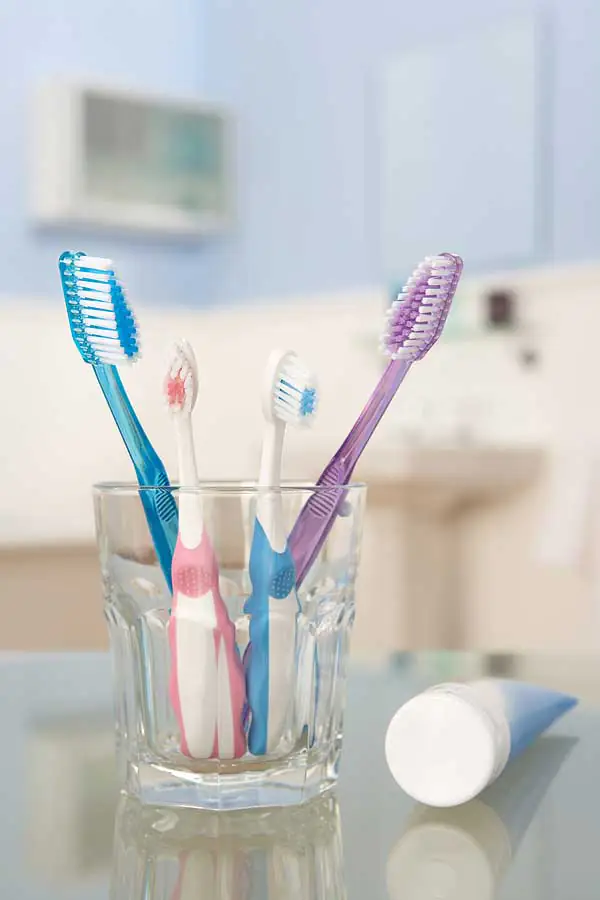
Keeping toothbrushes separate doesn’t stop with using your own. Store brushes upright, allow them to air dry between uses & avoid letting brush heads touch one another. Moist, enclosed environments encourage microbial growth, so skip the travel cap unless you’re actually traveling.
Sources
https://www.ada.org/resources/ada-library/oral-health-topics/toothbrushes
https://stacks.cdc.gov/view/cdc/23148
https://www.cdc.gov/hepatitis-b/prevention/index.html